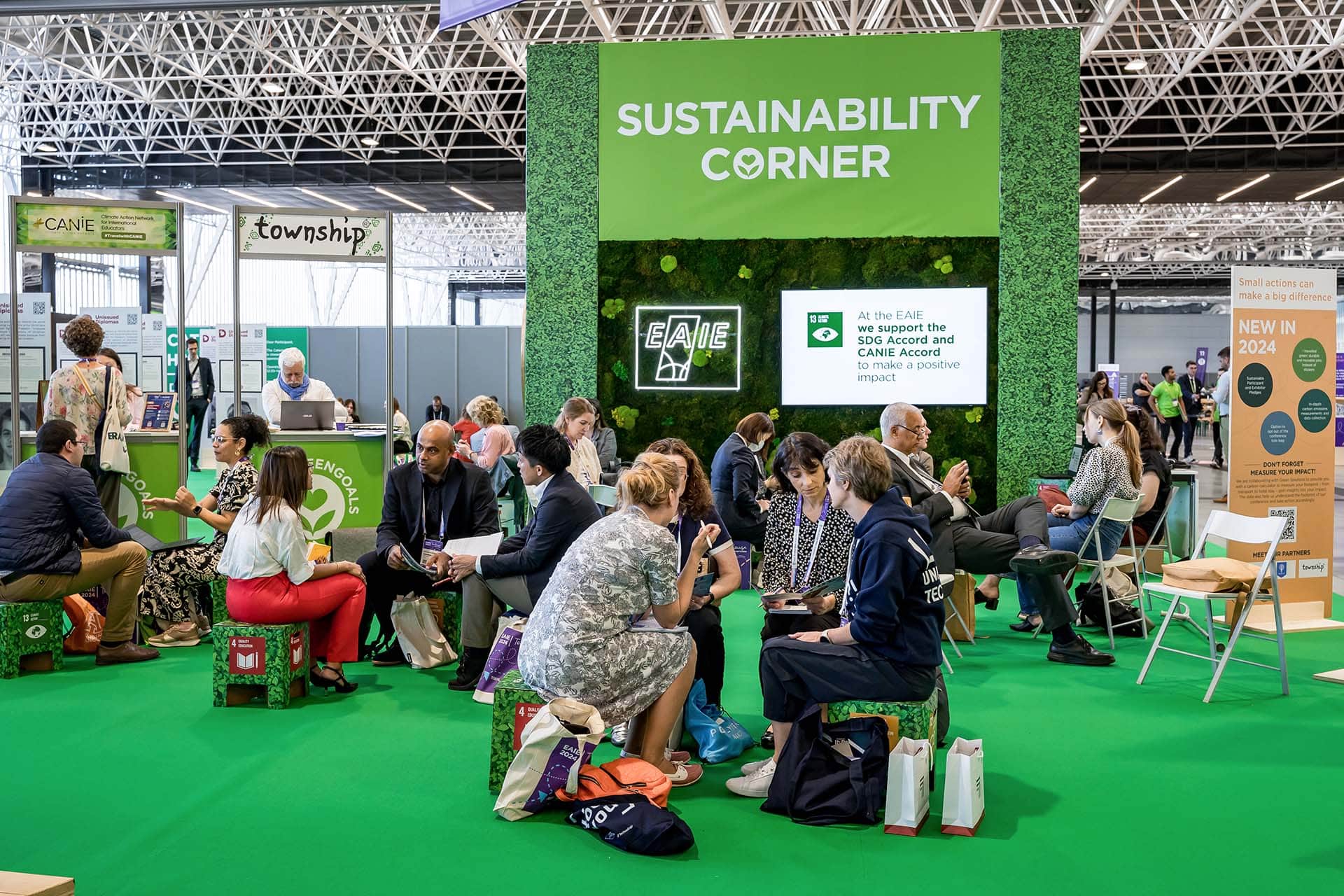
Impact and compensation
What if your event became a catalyst for change? In Toulouse, every carbon offset action can generate a chain of benefits for the environment, the local economy and society.
TRANSFORM YOUR EVENT INTO A DRIVER OF POSITIVE IMPACT
Every professional event leaves a mark. What if yours could become a source of opportunities for the region?
In Toulouse, we help you transform the environmental, social and economic impact of your event into a lasting legacy: reduction, compensation and creation of shared value with local stakeholders.
Measure to take action
Assess your waste, consumption, travel and CO2 emissions.
CALCULATE THE CARBON FOOTPRINT OF YOUR EVENT
You can estimate the greenhouse gas (GHG) emissions generated by all activities related to your event. The transport sector accounts for the largest share of GHG emissions from an event, but the contribution of other sources of emissions such as energy, food, accommodation and the use of certain products or services should not be underestimated.
To estimate the carbon footprint of your event, there are free simulators:
- The Good Planet Foundation calculator, which provides an assessment for your journey.
- Mon Impact Transport, a tool created by ADEME that allows you to compare the impact of your journeys more accurately according to different modes of transport (bike, metro, bus, car, etc.).
- ADERE offers practical guidance to help you take a responsible approach to organising and setting up a professional event, from conception to completion.
Committed local players can also support you=
- ClimatLocal is a SCIC (Société Coopérative d’Intérêt Collectif) social enterprise that has developed expertise over several years in CSR strategy, carbon footprint assessment and carbon projects, offering tailor-made, local and ethical solutions that meet the expectations of local areas.
- DCO2 offers carbon management solutions through its platform for measuring and monitoring the carbon performance of companies and their value chains.
REDUCE – LIMIT EMISSIONS, WASTE AND RESOURCE CONSUMPTION FROM THE DESIGN STAGE
It is essential to incorporate an eco-responsible approach from the very beginning of your event’s design. Limiting emissions, reducing waste and controlling resource consumption from the outset minimises environmental impact while optimising the overall efficiency and quality of the organisation.
Committed local stakeholders can also assist you from the very beginning of your event’s design:
- Hector the collector offers multi-stream solutions for sorting glass, cardboard, cans, plastics, etc., all in compliance with anti-waste regulations.
If you want to limit the impact of large-scale events, you can support associations and companies that offer various initiatives.
- La Glanerie, for example, is a circular economy company that recovers furniture and professional equipment to give them a second life.
- artstockasso is a waste management association for festivals and cultural events.
- Merci René specialises in reuse and reconditioning, particularly for learning spaces, using second-hand furniture but also manufacturing customised, second-life recycled materials and catalogue products.
- Maison Tournesol brings together an architectural firm and a furniture manufacturer around the circular economy, building and fitting out spaces based on reuse and recycling.
Local compensation
Beyond global offsets, support local projects – reforestation, energy efficiency, circular economy – led by local associations.
If you want to get involved as a group, you can take part in group waste collection initiatives. Waste collection campaigns are organised by the Toulouse-based association Champs d’actions.
These initiatives enable you to take action together, on your own scale, and raise awareness among participants and observers about the fight against pollution caused by waste.
All these initiatives will have a positive impact on the environment, but also on the economy and the local community.
Although you should plan ahead in terms of quantities, working with your agency, venue or caterer, you can also distribute any surplus to associations fighting food insecurity, such as Linkee or the Food Bank.
Raise awareness, capitalise and pass on knowledge
Academic conferences and symposiums do more than just bring researchers together: they energise the entire local ecosystem. By bringing together experts, students, manufacturers and institutions, these events raise the profile of the skills available in the region, stimulate collaborative research and promote technology transfer.
In Toulouse, each academic event contributes to structuring sectors of excellence – aeronautics, space, health, artificial intelligence – by building bridges between the scientific world and economic players, thereby consolidating the city’s position as a hub of knowledge and innovation.
Pass on your legacy by publishing your results and promoting your initiatives (impact, partnerships, feedback) from your event in Toulouse.
But why take action?
Leave a legacy
Designing actions with co-benefits maximises the overall impact of your event, strengthens stakeholder buy-in, enhances your image through concrete results, and creates lasting ties with the local community. Publish key figures from your assessment, describe your partnerships, and promote your actions (action plan, reporting, local impact). These best practices strengthen your image, inspire stakeholders, and legitimise the continuity of your efforts.
You can also raise awareness among your participants.
How can you promote your co-benefits?
Mention them in your communication plan (website, social media, local press).
Use simple indicators: number of trees planted, protected species, jobs created.
Create a map of the positive impacts to visualise their distribution across the region.
Invite your participants to visit or support projects related to your event.
For example: partner with a circular economy workshop working on waste reduction, vocational training, social integration, and repair education.
Offer educational activities during your events to raise awareness about climate issues, spark scientific interest, engage young people, and spread knowledge.
The + of the CVB
Let’s work together to build your positive impact on the Toulouse region!
Your event can change more than just a programme: it can change a region.
Contact our team to identify the projects and partners that will make your event a positive and sustainable experience.
We work hand in hand with associations, cooperatives and mission-driven companies to help you take concrete action:
- Environment & biodiversity
- Social inclusion
- Circular economy
- Social and solidarity economy